
{主关键词}
血战钢锯岭
'수유동 오피스텔 살인' 50대, 현금 노려 범행…수갑·결박도구 검색도_我的网站

A | 경제난에 평소 현금 보관하던 피해자 범행 대상으로 삼아휴대전화 10대 분석·CCTV 추가 확보…검찰 보완수사 후 기소 서울북부지검 로고(서울=뉴스1) 권준언 소봄이 기자 = 서울 강북구 수유동의 한 오피스텔에서 지인인 50대 여성을 살해하고 현금을 빼앗은 50대 남성이 범행 전 '수갑'과 '결박도구'를 검색하고 여러 흉기를 준비한 것으로 드러났다. 남성은 경제적 어려움을 겪자 평소 많은 현금을 보관하던 피해자를 범행 대상으로 삼은 것으로 조사됐다.서울북부지검 형사2부(부장검사 김가람)는 26일 강도살인 및 마약류관리에 관한 법률 위반(향정·대마) 등 혐의를 받는 나 모 씨(52)를 구속 기소했다고 밝혔다.나 씨는 지난달 28일 새벽 필로폰을 투약한 뒤 서울 강북구 수유동의 한 오피스텔에서 지인인 50대 여성 A 씨의 목과 옆구리 등을 흉기로 수십 차례 찔러 살해한 뒤 A 씨 소유의 현금을 빼앗은 혐의를 받는다.검찰 보완수사 결과 나 씨는 경제적으로 궁박한 상황에 놓이자 평소 다량의 현금을 보관하고 있던 A 씨를 상대로 강도 범행을 결심한 것으로 조사됐다.검찰에 따르면 그는 범행 전에는 '수갑' '결박도구' 등을 인터넷에 검색하는 한편 다수의 흉기를 소지한 채로 피해자의 오피스텔에 들어가 이런 범행을 벌였다.검찰은 경찰에서 사건을 넘겨받은 뒤 압수된 나 씨의 휴대전화 10대를 분석했다. 나 씨와 동거했던 지인의 주거지를 압수수색하고 나 씨와 A 씨의 계좌거래 내역도 분석했다. 범행 현장 오피스텔 폐쇄회로(CC)TV 영상도 추가로 확보했다.앞서 경찰은 금융계좌 거래내역과 범행 전후 상황 등을 토대로 나 씨에게 A 씨의 금품을 빼앗을 목적이 있었다고 보고 당초 살인 혐의를 강도살인 혐의로 변경해 지난 7일 검찰에 구속 송치했다.체포 당시 나 씨의 소지품에서는 마약류로 추정되는 물질이 발견됐으며 국립과학수사연구원 감정에서도 나 씨의 체내에서 대마와 필로폰 성분이 검출됐다.검찰은 피해자 유족에게 경제적 지원을 하고 피해자 국선변호사를 선정했다고도 밝혔다.서울북부지검 관계자는 "향후 유족의 재판 절차 진술권을 보장하는 한편, 피고인에게 그 죄에 상응하는 형이 선고될 수 있도록 공소유지에 만전을 기하겠다"고 했다.。

B |
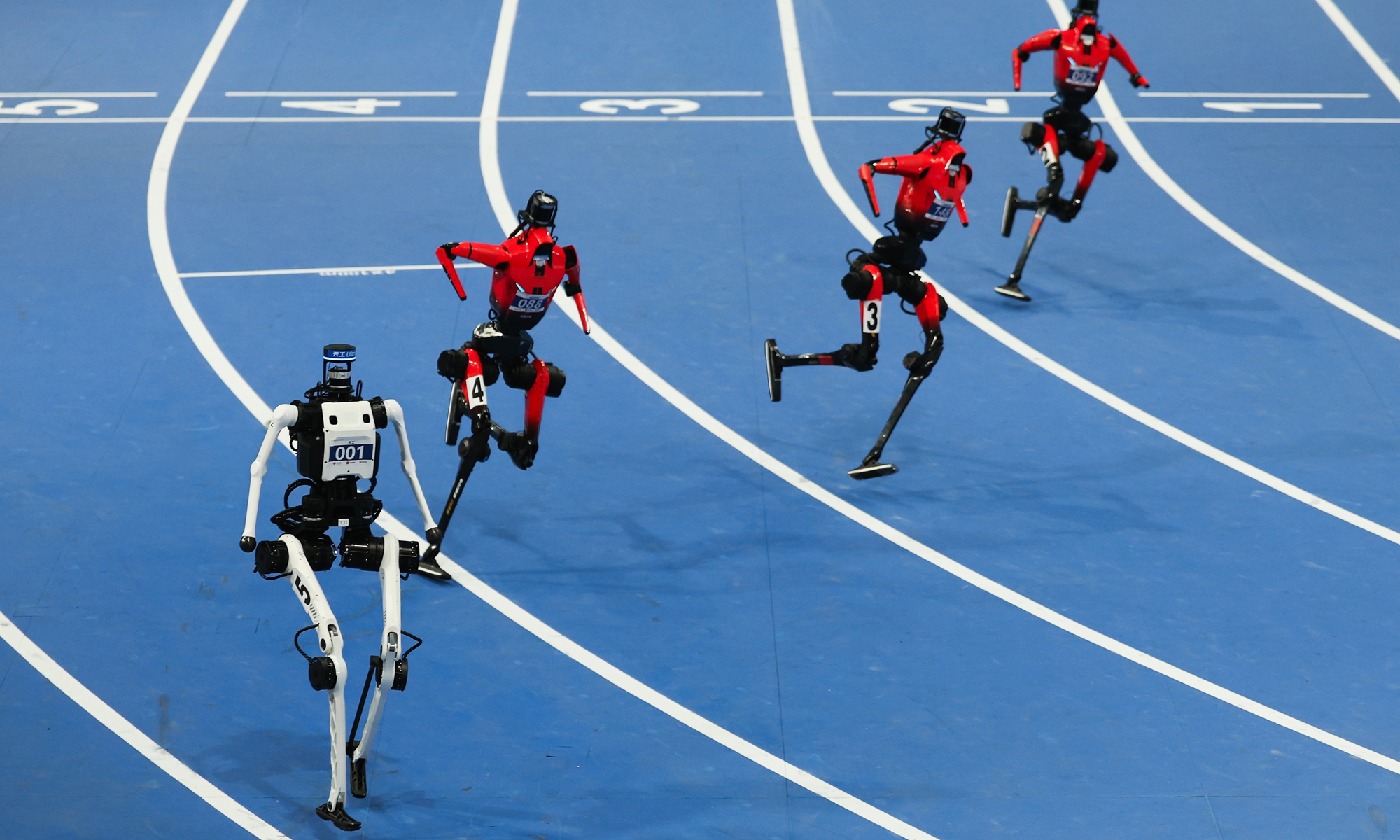
On the blue track inside the National Speed Skating Oval, robots chased each other in the 400-meter race. A sprinting Tien Kung robot was tripped by a rival robot lying on the track but did not fall. Instead, it adjusted its posture in seconds and continued toward the finish line with a result of 38.15 seconds, breaking human 400-meter race world record of 43.03 seconds, held by South African athlete Wayde van Niekerk.
This scene unfolded on Sunday, the first official competition day of the 2nd World Humanoid Robot Games (WHRG). Later that evening, a humanoid robot named Lightning, developed by Honor Co., broke the long-standing human 1,500-meter world record of 3:26 set by Moroccan athlete Hicham El Guerrouj with a time of 2:30.22. Just one night earlier, during the opening ceremony's 100-meter sprint and high jump demonstrations, humanoid robots had already shattered records long held by human athletes Usain Bolt and Javier Sotomayor — merely an appetizer for the five-day sci-fi spectacle.
The Games have attracted 666 teams from 16 countries across six continents, up 138 percent from its inaugural edition. The number of participating robots quadrupled to 2,056, the Global Times learned from the organizing committee.
Yet the biggest change this year was not only the scale, but also the technological maturity. More teams have shifted from remote-controlled robots to fully autonomous systems. Chinese observers, after watching several events, said humanoid robots are no longer limited to simple demonstrations of walking or dancing. Increasingly, they are being tested in environments that demand speed, coordination, perception and decision-making.
From movement to intelligence
Behind the record-breaking performances are a series of technological upgrades. During the running events, Global Times reporters observed that robots were able to make subtle movements around their hip joints while walking, allowing them to maintain balance and produce movements closer to human biomechanics.
Guo Yijie, technical director of Tien Kung Ultra, said the improvement came from advances in hardware design.
"Robot joints have improved in torque and speed. As competitions demand higher power output, the reliability of the main control board, power board and high-power battery discharge capability have become increasingly important," Guo told the Global Times.
According to Guo, the same Tien Kung Ultra robot was used in both sprinting and jumping events. For running, the waist needs rotation to balance the inertia generated by leg movements. For jumping, the upper body requires pitching movement to help the robot achieve greater distance or height, Guo said, noting that these can all be achieved with only slight adjustments to the waist configuration were needed, and it highly demonstrated to the robot design's flexibility.
Besides the hardware upgrades, developments in robots' faster decision-making in "brains' is better showcased in football competitions.
The Booster T2 robot used by many domestic and overseas football teams has increased its onboard computing capability by 10 times compared with the previous generation. The time from recognizing the goal to deciding whether to pass or shoot has been reduced to around 100 milliseconds - faster than the time humans usually need to blink.
Cheng Hao, a technical representative from Boosters Robotics, said the improvement represents an "end-to-end" transformation in embodied intelligence.
"In the past, robots relied on separate steps: perception, planning, decision-making and execution. Each stage was disconnected. Now, with an end-to-end motion foundation model, visual input can directly generate joint control commands," Cheng said.
The newly introduced table tennis and tennis competitions are also testing another important capability: perception.
"Robots are moving from simply recognizing the three-dimensional position of a ball to understanding the movement information of opponents and more complex environments," said Li Yinghui, a postdoc researcher and the leader from the Hong Kong University team at the table tennis event. Such capabilities developed in sports scenarios could eventually be transferred to other scenarios in industries or daily life, Li said.
Beyond entertainment
Though clips from the robot competitions have made a buzz on social media, with some critics from Western media questioning why robots need to dance, play football or compete in athletics while arguing that these activities appear far from everyday needs.
Zhou Changjiu, Vice President of the RoboCup Federation and the Robotics Competition Association of the Asia-Pacific (RCAP), stressed robot sports are not designed for entertainment alone. "Robot competitions are testing the capabilities needed for humanoid robots to enter the real world," Zhou told the Global Times.
Different events evaluate different abilities. Sprinting tests speed, marathons examine battery endurance and energy management, while football provides a comprehensive test because of its dynamic and unpredictable nature, testing intelligence, manipulation, interaction, safety, cost and trust at the same time, Zhou said.
Unlike a single-task demonstration, football requires robots to cooperate. Players must understand their own roles, recognize teammates and opponents, and make collective decisions - a form of swarm intelligence that could become essential when robots work together in homes, factories and emergency rescue environments.
Entertainment, however, can generate business opportunities. Gu Jinghai, brand director of EYOU Robot Co, told the Global Times that the company sold 95,000 integrated joints in China in 2025 and expects sales to exceed 1 million units in 2026. Growth mainly comes from planetary joints used in entertainment robots, while harmonic joints for industrial robots are also expanding steadily, he said.
Jiao Jichao, an executive from UBTECH Robotics, said the criticism that "Chinese robots can only sing and dance" reflects only a temporary stage of development. "Performance and dancing are also real commercial demands, and their existence has value," Jiao said. "Beyond entertainment, Chinese robots are already demonstrating intelligent capabilities that support practical applications in manufacturing, and partnerships with companies including Huawei and Foxconn, where robots have already entered production lines in small-scale applications."
The Outline of the 15th Five-Year Plan for National Economic and Social Development of China stated that the country will construct a comprehensive cultivation system for future industries including the embody intelligence as new economic growth drivers.
Zhou said the development of humanoid robots is not only about individual machines, but about building an entire ecosystem.
China's advantage lies in its complete supply chain, abundant application scenarios and manufacturing capabilities, while the fast growing industry still faces challenges such as the lack of unified standards.
Gu said the company has launched mass production of robotics joint under domestic standard of auto parts.
Robot competitions can help address these issues by creating common standards in areas such as competition rules, robot dimensions, communication systems, batteries and joint modules. "As applications expand, the cost of key robot components will continue to decline," Zhou said.
"Numbers are magic," Zhou said. "If producing one robot costs a huge amount because it is handmade, producing one million robots will completely change the cost structure."
For humanoid robots, the race taking place inside the Ice Ribbon may not ultimately be about who crosses the finish line first. It may be about whether these machines can learn to navigate the far more complicated race outside the stadium - the race into the real world.
。
Current article:http://lax6q0.minshixuanhabing.bond/tjfcm/20260826/9145.html
Published on:07:55:07
- 8914需求扩张叠加全球供应紧张共同推升铜价,LME铜逼近14500美元历史高位
- 3291英勇善战练精兵——记省“五一劳动奖状”获得单位兴城市消防救援大队
- 1170406【假期通知】2025年元旦假期致家长一封信
- 42468枣庄市人大社会建设委员会原主任委员,市委党校原一级调研员杨峥嵘被“双开”
- 81521郑钦文遭逆转无缘四强,4个残酷事实球迷不得不接受
- 439643早报:新腰到位!曼联官宣巴莱巴加盟
- 31585LIVE UPDATES: Pelosi Expected to Visit Taiwan Amid Trip to Asia, CNN Reports
- 7778月25日国内四大证券报纸、重要财经媒体头版头条内容精华摘要
- 402688러시아 와일드베리스 화재
- 7627988UK: Truss is muddy water still Sunak may not get a chance
- 9671341境外间谍入侵未报废旧服务器窃密,国安机关最新披露
- 8781687台风“梅花”预计于14日登陆我国 国家防总提升防汛防台风应急响应至三级
- 68942026年建站指南:从域名到上线全流程详解
- 2518753从7月CPI看经济内生增长动力
- 571008Intel Core i9-9990Xe曝光:频率高达5.0GHz,仅用于拍卖
- 99877可重构光学算术逻辑单元芯片研制成功
- 518141奥克兰机场和纽航再发警告:警惕这类诈骗!
- 976551Former Trump lawyer Sidney Powell pleads guilty in Georgia election interference case
- 1534604真人互动恋爱游戏《请去Bar,恋爱吧!》发售:原价29元 现九折26.1元
- 7631.3万元起的RTX 4090根本买不到 区域总代也只有1-3块
- 7021261德国调查人员发现莱比锡机场事件第三架涉事无人机
- 961261国产GPU四小龙之一燧原科技:科创板IPO启动初步询价
我的网站热门国内
- Copyright @ 2016-2017 我的网站 版权所有